


Heat Pump Design & Installation
At Central Plumbing & Heating, we specialise in properly designed and professionally installed heat pump systems. We believe the performance of a heat pump is determined long before it is switched on — through careful system design, accurate heat loss calculations, and the right equipment choices for your home.
As Heat Geek platform installers, we follow best-practice principles that prioritise efficiency, comfort, and long-term reliability. Every system is designed specifically for the property, installed by our in-house team, and commissioned to deliver the performance it was designed to achieve.
Whether for a new build or an existing property, our focus is the same: a transparent design process, high installation standards, and a heat pump system that works as intended for years to come.

Heat Pumps
-
Central Plumbing & Heating’s heat pump team has in-depth expertise in system design, installation and commissioning.
We place huge importance on getting the design right from the outset. Our customers value our transparent design process, in which we clearly explain every decision, from heat-loss calculations to emitter selection, so you fully understand how your heating system will perform.
-
New build projects are ideally suited to heat pump installations.
Working from your plans, our design team can create a highly efficient heating system and advise on key areas of your build, such as insulation levels, cylinder selection, and emitter design, to maximise performance and running efficiency.
Underfloor heating is strongly recommended for new builds, as it allows the heat pump to operate at lower flow temperatures, improving efficiency and comfort.
Send your plans to our design team to get started.
-
Retrofitting heat pumps into existing properties is our most common installation type.
During your initial survey, our experienced surveyor will assess your home and discuss key design considerations, including insulation, radiator suitability, hot water demand, and system layout.
Every retrofit is carefully designed to suit the property, ensuring reliable performance, comfort, and long-term efficiency.
-
All of our quotations include a heat pump performance estimate to help you understand how the system is expected to perform in your home before you proceed.
A heat pump’s efficiency depends on several factors, with system design and correct heat pump selection being the most important. Our design-led approach ensures these are optimised for each installation.
Expert Heat Pump Design for Maximum Efficiency
Every efficient heat pump system starts with a precise design. Liam, our in-house heat pump specialist, carries out a full, bespoke heat-loss survey of your home to ensure your system is perfectly matched to your property.
We’ll guide you through the pros and cons of each setup, helping you choose the right heat pump at the right price. We supply and install leading brands including Vaillant, Bosch, Samsung, and Mitsubishi.
This isn’t about doing the cheapest job. It’s about installing a robust, reliable system, designed properly and fitted by a heating engineer you can trust—while still offering competitive pricing.
Fill in the quick form below and we’ll get back to you ASAP.
Click here to get started
Claim £7,500 Off Your New Heat Pump, Guaranteed
Because we’re fully MCS certified, you automatically qualify to claim the £7,500 BUS grant when you install with us. We handle the entire application, deduct the grant from your quote upfront, and make the process simple, fast, and hassle-free.

Heat Pump Installation Form
We wIll get back to you ASAP
Heat Geek Verified Design for Maximum Efficiency
Great heat pumps aren’t just installed, they’re designed. As Heat Geek verified installers, we follow industry-leading design principles to ensure your system delivers the lowest running costs, the highest comfort, and rock-solid reliability.
Every installation starts with a full, room-by-room heat-loss calculation, precise emitter sizing, and a system layout that keeps flow temperatures low. This is the difference between a heat pump that struggles… and a heat pump that performs brilliantly all year round.
Heat Geek verified design means:
Lower flow temperatures = cheaper to run
Correctly sized pipework and radiators = consistent comfort
Smart control strategy = stable, efficient operation
A system that actually meets its SCOP rating in the real world
Get the design right, and the heat pump just works.
Heat pump FAQs
-
The heat pump enquiry questionnaire below this FAQ section is the best way to get in touch.
You will then be contacted by telephone by our heat pump team, who will discuss your property and heating system. After that, we will visit your property to conduct a survey. We will take measurements of all rooms. We call this the initial survey appointment.
Please ensure the homeowners are present for this survey. The initial survey appointment takes around 1.5 – 2 hours. We will provide an estimate based on this survey and our discussions during the appointment.
Once agreed, we will perform all the necessary calculations and BUS grant application and provide you with the legal documents required by MCS.
An installation schedule is agreed upon, and we install the new system based on the system design.
-
90% of UK homes are suitable for heat pumps. But heat pumps are not suitable for every property. Efficient systems heat the building using low-temperature radiators. Sometimes this isn’t suitable for properties with very poor insulation or high air changes.
We will discuss your property on our initial phone call.
-
There are a few requirements for claiming the BUS grant.
If there is a cavity in your external wall, it must be filled with cavity wall insulation.
Solid walls are not penalised, although they will affect your energy consumption.
Your loft insulation must meet the minimum requirements. This is usually about 200mm of fibreglass insulation.
The heating system the heat pump is replacing must be fuelled by fossil fuel: oil, gas, electric, storage heaters, LPG, etc.
The new heat pump system cannot be a bivalent/hybrid system. It must be fully renewable.
The heat pump must meet the full heating and hot water demands of the property.
The installation cannot be funded by another grant or scheme.
The heat pump to be installed must be registered with MCS.
The installation must be designed and installed by an MCS-registered company.
-
No, our initial phone call, site visit and estimate are free.
If the estimate is agreed to, the full quotation, heat loss calculations and system designs are £300 which are included in the heat pump installation price.
-
Heat pumps use the refrigeration process, the same process used by your fridge and air conditioning units.
The refrigeration process transfers heat. It does not create it.
A heat pump can transfer more heat (KW) than power (KW) it uses. A very well-designed system can transfer 4KW of heat and only use 1KW of power, thus giving 400% efficiency.
-
Yes. Your heating system will be designed to around -3ºC outside, and the heat pump will work down to -27ºC.
The refrigeration process uses a refrigerant gas which boils at a very low temperature of around -40ºC. Even at extremely low temperatures, it can transfer large amounts of energy, using heat from the outside air, into your heating system.
-
Not really. The most effective way of running a heat pump is at low temperatures. Running a heat pump at a high temperature is not efficient. We won’t install a heating system that isn’t efficient.
Some high-temperature heat pumps are available on the market, but these should only be used as a last resort.
-
Yes. To ensure lower running costs, your radiators will need to be bigger.
The bigger the radiators, the lower the radiator temperature. The lower the radiator temperature, the lower your heating bill.
Some radiators may already be the right size for a heat pump. We can work this out during the initial survey appointment.
Because a heat pump transfers heat from outside to your heating system, the lower the difference between outside air and radiator temperature, the less power it will use.
On a heat pump, reducing the radiator temperatures by 5ºC will, on average, reduce the heating bill by £400 per year.
-
Sometimes, yes. The water in the heating system must be circulated faster than in a traditional heating system to ensure system efficiency.
Sometimes, we can overcome small pipework by overcompensating in other areas like pump and primary pipework sizes. Sometimes, it is best to change sections of pipe. This must be accurately calculated as an increased pump load will use more energy.
This will be discussed at your initial survey appointment.
-
Yes, there are some months when there will be a good crossover of solar energy and heating output. But the heat pump will run primarily on mains electricity in the winter.
We do not install solar panels, but we do have some local companies to which we can refer.
-
Yes. Batteries are a great way to reduce the cost of running your heat pump. Batteries can charge using cheaper night rates, and the heat pump can use the energy during the day when the outside air is warmer, and the heat pump is most efficient.
-
Yes. Some heat pumps are smart-grid-ready and will “talk” to your energy provider. This has some design considerations, but we can discuss this during your initial survey appointment.
Enter your property details for an estimate
Use our heat pump design tool to enter your property details so we can give you an estimate for your new heat pump system
Or, use our contact form for a rapid response
Under-performing heat pump? Get it sorted by an expert.
High bills, cold property, electrical faults, circulation issues, balancing, flow faults.
We’ve helped hundreds of customers with their heat pump issues, from minor faults to full re-pipes.
Buffer removal
Pipework upgrades
Full re-commission and setup
VDI 2035 water treatment
Radiator balancing
Underfloor heating
Powerflushing
New heating system installation
Service and maintenance
Inhibitor test and refill
Magnetic filter and strainers
-
![Central Plumbing & Heating Mitsubishi heat pump]()
6KW Mitsubishi
-
![Central Plumbing & Heating Mitsubishi heat pump]()
5KW Mitsubishi
-
![Central Plumbing & Heating heat pump]()
11KW Mitsubishi
-
![]()
5KW Worcester Bosch
-
![Central Plumbing & Heating Samsung HT heat pump]()
12KW High Temp Samsung
-
![Central Plumbing & Heating Vaillant Ground Source Heat Pump]()
8KW Ground Source Heat Pump

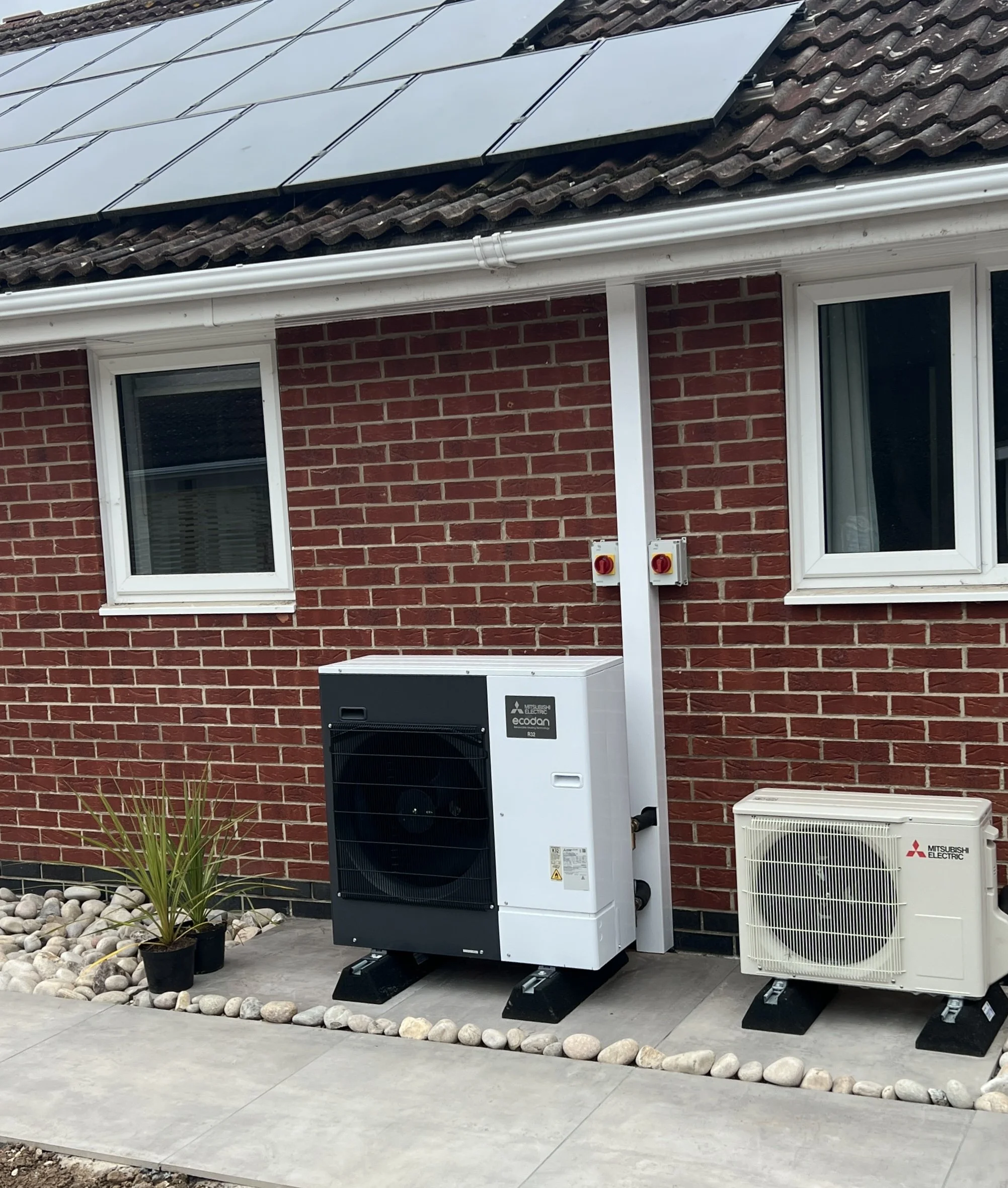


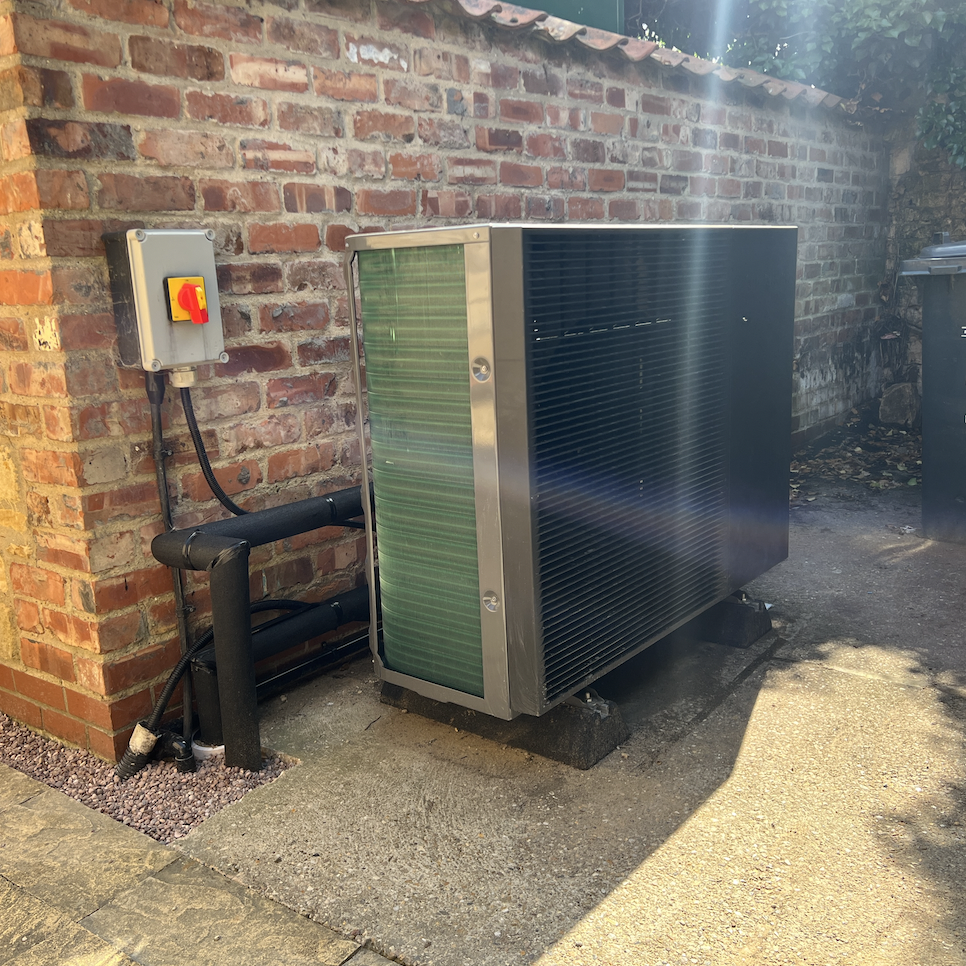
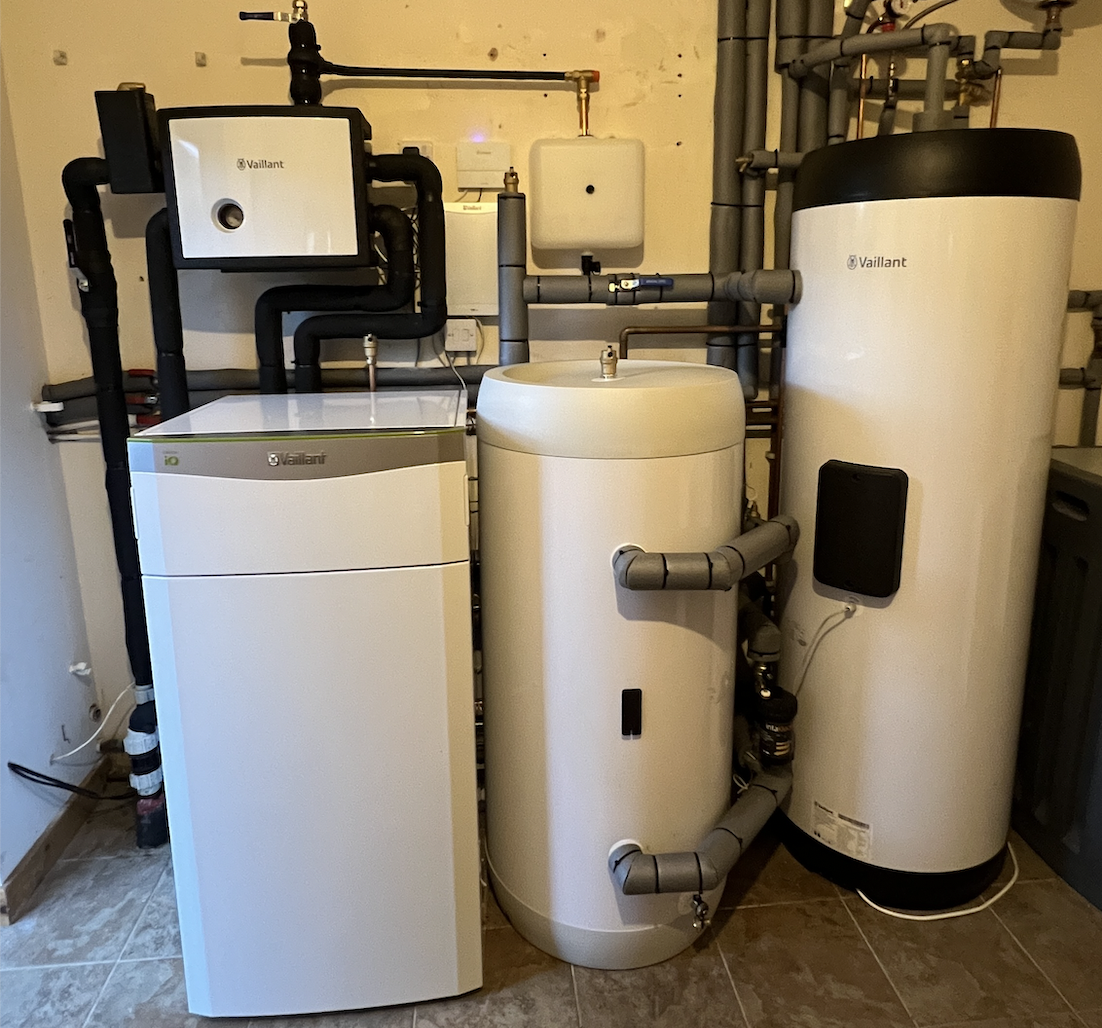
Heat pump Jargon Buster
-
ABV: Automatic bypass valve
A valve that automatically opens when other parts of the system are shut. The most common use of this is when TRVs and lockshields are installed, but it can also be used for multi-zone systems. ABVs make sure there is always sufficient flow.
AFV
Anti-freeze valve. Installed to protect the ASHP and pipework from freezing conditions. At 3ºC they open up and let the heating water out. They will only open if the heat pump is off during freezing conditions, as the heat pump keeps the water at 20ºC when the outside temperature is below 5ºC.
ASHP: Air source heat pump
A unit that transfers heat from outside into heating water using the refrigeration cycle.
BUS: Boiler Upgrade Scheme
£7,500 grant given to homeowners towards the cost of a new heat pump installation. Run by OFGEM.
BUH: Back-up heater
An independent electrical heater which supplements a heat pump for space heating and/or DHW. Usually piped in-line on the heat pump pipework.
CH: Central Heating
The heating system in the property. Normally, just referring to the emitters and pipework, such as rads and UFH. CH is sometimes written on motorised valves to differentiate between CH and HW.
CCTs: Close Coupled Tees
System separation, allowing two parts of a system to circulate at different velocities.
COP: Coefficient of Performance
Efficiency at that time. Instantaneous ratio of energy produced and energy consumed. 4KW produced, and 1KW consumed would be written like 4.0, which means the system is 400% efficient at that moment.
CT: Current Transformer (CT clamp)
An instrument that measures current in a cable used (with known voltage) to estimate load power. Typically, a clip-on or a clamp.
DHW or HW: Domestic Hot Water
The hot water system of a property. Includes the cylinder, hot-water pipework and heating pipework feeding the cylinder.
EPC: Energy Performance Certificate
Rating of a property’s energy performance by an independent accredited assessor.
EV: Expansion vessel
A tank filled with air or nitrogen. As the water is heated it expands and enters the EV and compresses the air. EVs can be red, blue, white or grey. A red EV is used for heating only. The others can be used for hot water and heating.
GSHP: Ground Source Heat Pump
A unit, usually placed indoors, which transfers thermal energy from external underground pipework into heating water using the refrigeration cycle.
HVAC: Heating, Ventilation and Air Conditioning
A collective term for trades and equipment.
HW or DHW: Domestic hot water
The hot water system of a property. Includes the cylinder, hot-water pipework and heating pipework feeding the cylinder.
LLH: Low-loss header
System separation. A vessel or pipework that allows two parts of a system to circulate at different velocities.
LS: Lockshield valve
A standard radiator valve which can be set at a lower setting to restrict flow to a radiator, normally used for balancing.
LWT: Leaving water temperature
Temperature of the water leaving the Outdoor Unit. Usually referred to as Flow.
MCS: Microgeneration Certification Scheme
An independent company overseeing all renewable technology in the UK. They also set the standards for installation.
MVHR: Mechanical ventilation with heat recovery
A system that transfers heat from air that is removed from the property into air that is entering the property.
ODT: Outdoor temperature
The temperature reading from the devices outdoor sensor
OFGEM: Office of Gas and Electricity Markets
Governmental regulatory body supervising the gas and electricity markets. Runs and operates the BUS.
PHE or PHEX: Plate heat exchanger
A type of equipment which transfers heat from one medium to another. In a heat pump, it's from refrigerant to heating water. In a combi boiler, it’s from heating water to hot water.
PRV: Pressure relief valve
Sometimes referred to as a blow off. A safety device which allows water to escape when the set pressure is reached.
PRV: Pressure reducing valve
A device that reduces water pressure as it enters a system. These are found on all unvented cylinders and are a type of safety device
PWM: Pulse width modulation (PWM pump)
Some types of heat pumps and boilers can control an external pump using PWM. It is the small wires going to a pump.
Rad
Radiator
R22 / R32 / R410a / R290
Refrigerants are named using a standard system that reflects what type of refrigerant they are and, for synthetic ones, how many carbon atoms are in the molecule. The number isn’t random, it just helps engineers identify the type of gas.
R32: Refrigerant 32
GWP 675. A widely used refrigerant in domestic heat pumps from around 2015 to the present. It has a 68% lower GWP than R410A and offers good efficiency. R32 is mildly flammable (A2L) but has minimal siting restrictions compared to R290. It is expected to be phased out over the coming years as regulations move toward ultra-low GWP refrigerants.
R410a: Refrigerant 410a
GWP 2088. Commonly used in heat pumps between 2003 and 2018. It has zero ozone depletion potential (ODP), unlike older refrigerants such as R22 (ODP 0.055). R410A is non-flammable and is still found in some existing domestic systems and commercial heat pumps. It is already being phased out due to its high GWP.
R290: Refrigerant 290
GWP 3. A natural refrigerant (propane) is increasingly used in modern air-to-water heat pumps. It delivers excellent efficiency with an extremely low environmental impact. R290 is highly flammable (A3), so additional siting and safety clearances are required. It is widely considered a long-term, future-proof refrigerant.
R22: Refrigerant 22
GWP 1810. ODP 0.055. An older refrigerant was historically used in heat pumps and air conditioning systems before modern environmental regulations. R22 damages the ozone layer and has been fully banned in the UK and EU for new equipment and servicing. Included here for historical comparison only.
RWT: Return water temperature
Temperature of the water as it re-enters the Outdoor Unit. Usually referred to as Return.
SCOP: Seasonal Coefficient of Performance
Efficiency like COP but averaged over a period of time. A performance estimate will use a SCOP over a period of 1 year to give the customer an idea of the efficiency to expect. SCOP can be calculated over any time period (hour, day, week, month year). You could compare a SCOP from a cold week to a mild week for example.
T&PRV: Temperature and pressure relief valve
A safety device is typically installed on the side of an unvented DHW cylinder. Releases a large amount of water if the water temperature reaches the set point (commonly 95ºC) or set pressure (commonly 7 bar). Sometimes referred to as the blow-off
TRV: Thermostatic radiator valve
An energy-saving device fitted to radiators that reduces the flow to the radiator when the room is approaching the set temperature.
UFH: Underfloor heating
Pipes are installed in the floor. Water is circulated, and the heat is emitted through the floor.
WC: Weather compensation
A programme that runs on a heat pump or boiler and automatically adjusts the LWT based on the ODT. As the ODT decreases, the LWT increases.
-
Air to air (A2A)
Known in the UK as air conditioning or air con. It is also known as an air-to-air heat pump. Refrigerant is circulated to indoor units, and cooling or heating is blown out using fans.
Air to water (A2W)
Known in the UK as an air source heat pump (ASHP). It is also known as an air-to-water heat pump. Refrigerant is circulated through a plate heat exchanger, and heat is transferred into water, which is circulated through emitters or to a DHW cylinder.
Brine
When Glycol is mixed with water to lower its freezing set-point the liquid is then referred to as brine. Brine is always used in GSHP underground pipework and sometimes in ASHP heating pipework.
Buffer
A tank installed on a heating system. A true buffer has three or more connections and provides system separation by allowing two parts of a system to circulate at different velocities. A buffer is the name given to the tank, but a buffer that only has 2 connections is a volumiser (see below).
Cycling
When a heat source starts and stops. It can be measured as starts per hour. The lower the better for any heat source. An oversized heat source or one fitted with a buffer will have more starts per hour and may even “short cycle” (see below).
Design output
The estimated output of the heat pump at design conditions. Typically -3ºC.
Emitter
Radiator, convector and/or underfloor heating system
Heat pump ASHP or GSHP
A unit that transfers heat from outside and uses the refrigeration cycle to convert the heat into a usable temperature.
Hysteresis
Normally referred to in K (Kelvin, which is the same as ºC, but used when measuring a difference (∆t) in temperature) The difference or in temperature or ∆t between on and off. A 10K hysteresis on a cylinder would mean if the set point is 50, the water would have to decrease by 10ºC for the heat source to start heating it back up to 50 again.
Indoor Unit (IDU)
An ASHP component that includes the system components required for the outdoor unit to operate. These sometimes have a pump and a diverter valve. They can also include a PHEX if the system is a split type. Only a small number of ASHPs use an indoor unit.
Micro-zone or micro-zoning
Most commonly associated with UFH. A micro-zone is when there are lots of “zones” (see below) on a heating system, which when only one or two are on at the same time, give the heat source a very small heating load. Micro-zoning causes “short-cycling” (see below), which reduces efficiency because the heat pump needs at least 10 minutes of run time to reach full efficiency.
Outdoor Unit (ODU)
It is the main ASHP unit. It is sometimes referred to as a condenser (because an air-con ODU is called a condenser). It has a fan, compressor and PHEX. Some units contain the plumbing components, such as the pump and expansion vessel.
Short-cycling
Terrible for heat pump efficiency and should be avoided at the design stage. Short-cycling is when a heat pump only runs for a few minutes before it has to turn off again due to reaching temperature. A heat pump needs at least 10 minutes run time to reach full efficiency.
Causes of short cycling include: “micro-zoning” (usually from multiple UFH zones in a property), buffers, by raising the temperature of the return water to the heat pump, and oversized heat pumps.
Setback
A heat pump has an “on” set temperature e.g 20ºC. The setback temperature is the “off” temperature or minimum temperature of the property. Usually we set this 2-3ºC lower than the “on” temperature. This prevents a huge demand on the heat pump when the next time programme comes on.
Thermal store
A large vessel whose only purpose is to store heat ready to use at a later time. A thermal store can be heated with cheap electricity to use at a later time e.g during peak rate, or with solar thermal to use for hot water.
Volumiser
A vessel whose only purpose is to provide more volume in a system. ASHPs need a minimum volume to complete the defrost cycle so a volumiser can provide that. They can also be used to improve the efficiency of an ASHP. A volumiser can be used to negate the effects of micro-zoning.
A volumiser may sometimes be referred to as a buffer because that's the component's name when purchased. What differentiates a buffer from a volumiser is that a volumiser only has two pipes.
Water Law
Samsung terminology for weather compensation
Weather compensation:
A programme that runs on a heat pump or boiler and automatically adjusts the LWT based on the ODT. As the ODT decreases, the LWT increases.
Zone
A property may have more than one heating zone. So we refer to them as zones. The most common type of zones are upstairs and downstairs
Heat pump service
Hydrogen as a zero carbon fuel

Hydrogen-ready Boilers
Hydrogen is a zero-carbon fuel.
New gas boilers are hydrogen ready which means they can use a mix of 80% natural gas and 20% hydrogen with no need for a boiler engineer to attend to change any settings.
The future of gas boilers and the gas network is a hydrogen blend which will help us achieve our net-zero 2050 target.
Why hydrogen-ready boilers?
Some new boilers are designed to be able to run normally with up to 20% hydrogen mixed with natural gas. We call this hydrogen-blend natural gas.
Hydrogen burns cleanly with zero emissions. Mixing it with our normal natural gas supply can reduce carbon without too much upheaval.
Hydrogen-blend is still in its infancy with tests on villages and towns currently going on around the country.
The downside to hydrogen is that most production worldwide uses fossil fuels, and the cost of production is high.
Green production is possible with renewable technology, so hopefully, in the near future, we can produce hydrogen cleanly and cost-effectively.

Become a Carbon Reducing Hero
Green Heroes campaign.
At Central Plumbing we strive to protect our planet for future generations, in the boilers and heat pumps we manufacture, the way we package and distribute them, and through the processes, we use at our UK manufacturing plants.
Our latest campaign aims to remind homeowners and landlords across the UK in a light-hearted way that one of the most impactful and simple things they can do to reduce their carbon footprint is to upgrade their heating system.